The way leaders communicate has a deeper impact than any written plan or presentation. Words shape beliefs, influence confidence, and define how a team shows up every day. When language is careless, it quietly limits growth—but when it is intentional and empowering, it can transform an ordinary group into a high-performing team.
Recently, I came across a leadership insight shared on LinkedIn by Amy Gibson, CEO of C-Serv, and it left a strong impression on me. It reinforced an essential reality of leadership—communication is not optional; it is central to how leaders influence people. Research shows that leaders spend close to 80% of their time communicating in some form.
Clear and intentional communication helps build trust, brings alignment, and defines workplace culture. We have all witnessed how the choice of words can shape outcomes, whether for an organization or an individual. In her message, Amy highlighted the contrast between language driven by insecurity and language rooted in trust. Leaders who lead with trust consistently convey messages like “You are trusted,” “You belong here,” and “Your ideas matter.”
Small changes in how leaders communicate may seem minor, but over time, they can create powerful cultural shifts that positively transform teams and organizations. Below explains clearly about Insecure Leaders Vs Trusting Leaders
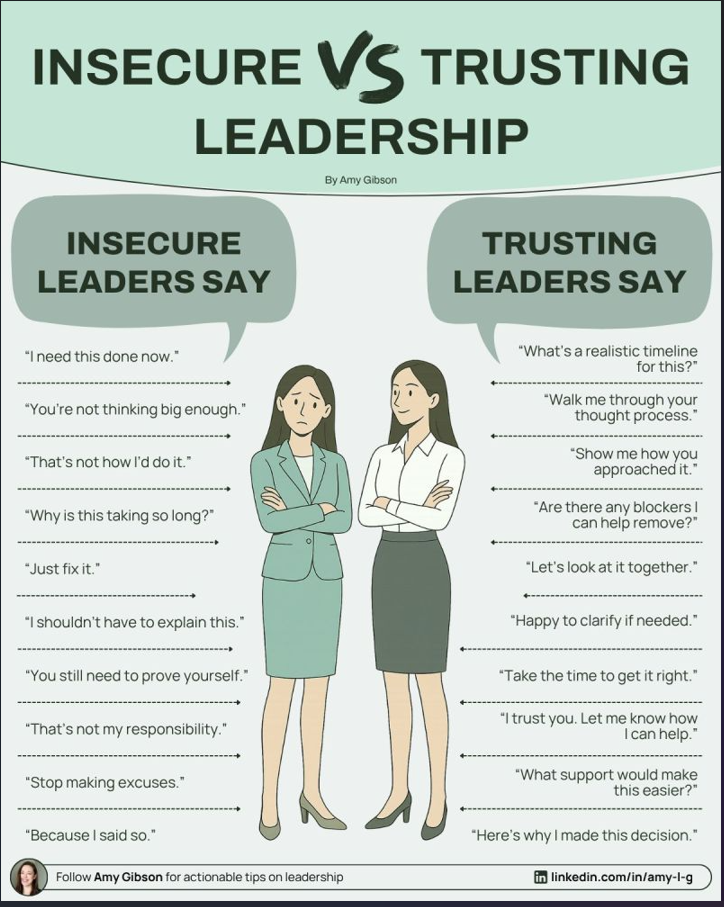
Insecure vs. Trusting Leadership – Image Source: Linkedin Original Post: Amy Gibson, CEO, C-Serve
In leadership, the difference between insecure leaders and trusting leaders is often reflected in the language they use and the environment they create. Insecure leaders tend to control, question excessively, and communicate from a place of fear, which can quietly erode confidence, limit initiative, and create a culture of dependency. Trusting leaders, on the other hand, empower their teams through open communication, clarity, and belief in people’s abilities. They focus on collaboration rather than control, encourage independent thinking, and make team members feel valued and included. While insecurity restricts growth and innovation, trust fosters accountability, ownership, and long-term performance—proving that leadership rooted in trust builds stronger teams and healthier workplace cultures.
If the perspective posted above resonates with you, it’s a positive sign that your leadership approach is already aligned with growth and trust. However, if it doesn’t, it’s not a setback—it’s an opportunity. Leadership is a skill that can be learned, refined, and strengthened with intention and self-awareness. By investing in your communication, mindset, and people skills, you can move toward a more trust-driven style of leadership. True leadership is not about control, but about growth—both your own and that of others. When you choose to evolve, you don’t just improve your own success; you create an environment that develops confident, capable leaders who will carry that same culture forward.